

How Play Therapy Helps Preschoolers Navigate Big Emotions
Chelsea Ann Peralez
Preschoolers are young children who live in a world where emotions are often bigger than words can contain. Their scraped knee becomes a catastrophe, and sharing a toy feels impossible. As preschoolers move from one activity to another throughout the day, there is always room for meltdowns. To us, these seem disproportionate to the situation, but the important truth is that these children are experiencing genuine distress.
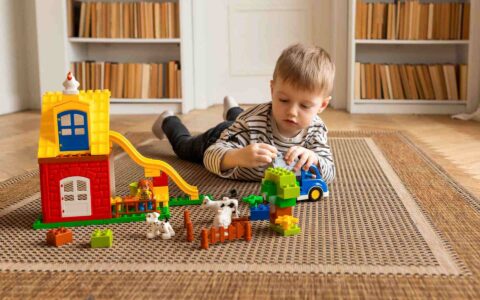
The challenge is a preschooler’s lack of language and cognitive tools to express their feelings. Play therapy is the bridge between a child’s inner world and their ability to process big and difficult emotions. It meets them in their natural language of play. When preschoolers cannot tell you what happened, they will feel more comfortable showing the event through their play. This form of expression is their voice when words fail them.
As parents, we know it is important to teach our children. Scripture emphasizes this:
Train up a child in the way he should go; even when he is old he will not depart from it. – Proverbs 22:6, NIV
Understanding the Developmental Stage of Preschoolers
The preschool years are typically ages 3-5, and they represent a period of rapid brain development. In this stage, children are learning to separate from caregivers, assert their independence, and navigate social relationships with other preschoolers. The part of the brain that is responsible for emotional regulation and executive function is still developing. This results in a gap between what they feel and what they can manage.
 Preschoolers experience the full intensity of emotions without the capacity to regulate them. When a child is anxious about starting preschool or frustrated when a block tower falls, these emotions are as real and overwhelming as any that adults may experience. The difference between their experience and that of an adult lies in their ability to name, understand, and cope with these feelings.
Traditional talk therapy, which is typically used in these situations, often poses challenges for preschoolers. At this age, children do not have the developmental capacity to have a sit-down discussion about their feelings in abstract terms.
A three-year-old who is struggling with separation anxiety cannot explain the fear that grips them when they watch their parent leave or the tightness in their chest that results from that fear. When a four-year-old sees a frightening event, they may not have the vocabulary to describe what they saw and how it made them feel. Their developmental stage has not given them the tools or skills to navigate these situations.
While they are young, and these may seem like small things, we are reminded that even small things have great value:
Do not despise these small beginnings, for the Lord rejoices to see the work begin. – Zechariah 4:10, NIV
How Play Therapy Works for Preschoolers
The process of play therapy is a simple yet profound principle that allows children to express themselves through play naturally. Christian counselors create safe, structured environments for children to explore emotions through toys, art, materials, trays, puppets, or storytelling.
Each of these becomes a communication tool for a child struggling with situations such as witnessing a frightening event or sibling rivalry. The playroom itself becomes a sacred place where feelings that have been locked up can find room to escape and bring healing.
The counselor observes the patterns the child uses during play and notes recurring themes, shifts in energy, and moments when the child may seem stuck. Christian counselors, trained in this type of treatment, understand that the child takes the lead. The counselor offers general reflections, creating space for the child to work through the experience at their own pace.
The child can externalize what feels overwhelming internally. When they use a toy to express anger, they learn that anger can be acknowledged, contained, and managed. With the right guidance, the child is permitted to explore the feeling without judgment.
The Role of Play Therapy in Emotional Processing
Play helps young children make sense of the world. They rehearse social scenarios, experiment with cause-and-effect, and develop problem-solving skills. Play becomes more essential when emotional challenges arise. Children who have experienced trauma, witnessed conflict, or struggled with anxiety often carry these experiences in their body and behavior without conscious awareness.
It is well known that young children process experiences through repetition. Their behaviors are not random. Play therapy provides a safe environment for natural processing to occur with professional guidance. This allows the child to navigate big feelings about experiences such as a frightening car ride or family disruption. Each session will build on the previous one, which creates a pathway toward emotional understanding and resiliency.A child may repeatedly crash toy cars together as they work through the memory of an accident. Another child might use dolls to recreate a scene from home, trying to understand what happened between their parents. This repetition is not a meaningless activity. It represents the child’s attempt to gain control over an experience that felt chaotic and uncontrollable.
Some Christian counselors specialize in child development and can help with healing the whole person through play therapy. For Christian families, play therapy with Christian counselors can include prayer and biblical stories adapted to the child’s level. This integration respects the child’s developmental stage while honoring the family’s faith values.
When Christian Counselors Recommend Play Therapy
Many situations lead families to seek play therapy for preschoolers. Behavioral challenges that persist despite consistent parenting often indicate that a child is struggling with something beyond typical developmental phases. Signs of these challenges are aggression, withdrawal, excessive fears, or difficulty with transitions.
When family structure changes, preschoolers can be overwhelmed, and their coping capacity is diminished. Exposure to traumatic events, medical procedures, or ongoing stress may warrant professional support and play therapy.
Christian counselors who work with these young children assess the presenting behaviors as well as the family context and support system. These counselors are looking for patterns that suggest a child is carrying emotional weight without the tools to release it. Some parents may describe a child who was previously joyful becoming withdrawn, or a typically flexible child becoming rigid in controlling.
These types of shifts signal that something has disrupted the child’s sense of safety or predictability. The goal is to understand what the behavior is communicating about their inner experience.
Play therapy often becomes the chosen form of treatment after multiple approaches have been tried. Parents decide after they have implemented all the tools they have, and they still face challenges with their preschooler.
This is not an indication of any failure, but rather a recognition that some emotional needs require specialized support. Christian counselors can help these families with compassion. This helps the parent understand that choosing help demonstrates strength and commitment to their child’s well-being.
Is play therapy right for your child?
The preschool years are an important foundation for how children will understand and manage emotions throughout their lives. When these young children receive support during times of distress, they will learn that feelings are manageable and that help is available. Play therapy offers a developmentally appropriate pathway for preschoolers to process the big emotions that words cannot capture.
Christian counselors are available to families seeking to integrate faith with therapeutic practices. When children learn that they are loved by God, known by name, and valued beyond measure, they carry a truth, even though they may not articulate it. Play therapy is a technique that honors the dignity and emotional needs of the tiny humans among us.
If your preschooler is showing signs of emotional distress, contact our reception team to learn more about how play therapy can support your family’s journey toward healing and hope. Our office can connect you with a Christian counselor who specializes in early childhood mental health.
https://www.psychologytoday.com/us/therapy-types/play-therapy
https://www.verywellmind.com/play-therapy-definition-types-techniques-and-efficacy-5190794
https://psychcentral.com/lib/benefits-of-play-therapy-for-children
https://www.webmd.com/mental-health/what-is-play-therapy
https://www.headspace.com/articles/play-therapy
Photos:
“Toys”, Courtesy of Teo Zac, Unsplash.com, CC0 License; “Boy Playing”, Courtesy of Polesie Toys, Pexels.com, CC0 License
