
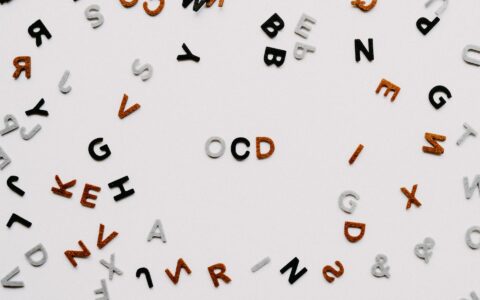

The Truth Behind Obsessive Compulsive Disorder
Michele Shaw
Obsessive Compulsive Disorder (OCD) has become a term that’s bandied about for people who enjoy tidiness and order, or things done in a particular way. In reality, the mental health condition OCD is a far more severe and disturbing illness, characterized by intrusive, unwanted thoughts (called obsessions) and repetitive behaviors (compulsions) that are carried out in an attempt to ease the anxiety caused by the obsession.
It is quite a common disorder, affecting one in fifty people worldwide, according to the Diagnostic and Statistical Manual of Mental Disorders.
What types of obsessions and compulsions do sufferers experience?
The four major types of obsessions are contaminants, aggressive impulses, sexual content, and the need for symmetry. In these categories, the ideas and impulses vary between individuals – for example, an impulse to hurt someone near to you, for no reason; fear of germs and getting sick; over-thinking an issue or replaying a sin committed; or a strong need to achieve perfection.
 The OCD sufferer often describes feeling trapped by these unwanted thoughts that intrude on daily life and cause much anxiety and fear.
To neutralize the thought or alleviate the anxiety, the individual falls into ritualistic behavior, which may stay the same for a long period or become more complex and varied. Common compulsions include excessive cleaning and/or hand washing; counting or making things end on a specific digit (for example, switching a light on and off three times); arranging items in a precise way; or repeatedly checking things (going back to check the oven is off, etc.).
These compulsions are as unwanted as the obsessions driving them, but if they are not performed, the person’s anxiety levels will skyrocket.
What causes OCD?
As people living in a broken world corrupted by sin, we fall prey to all kinds of illnesses and irregularities in our physical and mental health. OCD is just one of these, and it can affect anyone.
OCD is caused by chemical, structural, and functional abnormalities in the brain. In OCD sufferers, the caudate nucleus, which is like a processing center for complicated messages generated by the front part of the brain, is seen to have a “glitch.” By causing the frontal lobe to become overactive, the rapid shifts of thoughts and behavior that people typically make, without thinking about them, are disrupted.
It is a bit like a car stuck in the mud – the wheels spin round and round, but they cannot gain traction to move forward. OCD sufferers are therefore flooded with thoughts and impulses that enter their minds, which they need to act on to manage the discomfort caused by them.
OCD has strong genetic and hereditary links. If a parent or sibling develops the condition, there is a greater likelihood that other family members will exhibit signs of it too. Men and women are equally affected, and while the illness often manifests in the teens or early adulthood years, it can also begin in childhood.
How can OCD be treated?
While OCD is not “curable” in the sense that it can be treated by medication and never recur, there is much support that can be given to sufferers to help them make progress in managing the disorder, to the point that it does not encroach into every aspect of daily life. Counseling is a good first approach, and medications (typically, antidepressants known as SSRIs) can also be a treatment option.
Secular psychologists will focus on Cognitive Behavior Therapy (CBT) to help individuals cope with and change problematic thoughts, behaviors, and emotions. A specialized type of CBT for OCD is Exposure and Ritual Prevention, whereby an individual is gradually introduced to objects or situations that trigger their obsessions and compulsions until they learn to cope with their anxiety and distress.
In Christian counseling for OCD, the sufferer will be affirmed that God does not condemn them for their struggle with OCD. They are no less valuable or important to God, who ensured that they were “fearfully and wonderfully made” (Psalm 139:14).
In fact, just like God gave Paul a “thorn in his flesh” – some kind of physical or mental impediment – that he chose not to remove, despite Paul pleading with him to do so (2 Corinthians 12:8-10), God can use a person’s OCD to draw them closer to him and grow them in faith, as they start a journey toward committing their struggle to God and doing the mental work involved in a Christian counseling journey.
Biblical counselors John and Janie Street (authors of The Biblical Counseling Guide for Women) have devised a biblical method based on Jeffery Scwarz’s 2016 book Brain Lock, which described four steps to help OCD sufferers, together with before-and-after PET scans showing actual changes in the brain. The Streets’ method uses the following two verses as foundational in Christian counseling for OCD:
“Do not be conformed to the pattern of this world, but be transformed by the renewing of your mind, that by testing you may discern what is the will of God, what is good and acceptable and perfect.” (Romans 12:2)
“…put off your old self, which belongs to your former manner of life and is corrupt through deceitful desires, and to be renewed in the spirit of your minds, and to put on the new self, created after the likeness of God in true righteousness and holiness.” (Ephesians 4:22-24).
The four-step process for OCD sufferers is as follows
Repent This step is about identifying all the obsessive thoughts that sinfully presume one’s ability to live by rigid rules of thoughts and behaviors, and confessing them for this reason, for the lie that they uphold about what will bring peace and joy.
Re-label As opposed to seeing the thoughts as things to be feared, re-label them as what they are – the source of anxiety and fear. Realign your focus to fear God only (Psalm 34.9).
Replace This step looks to substitute anxious thoughts with ones that are true, noble, right, pure, lovely, admirable, excellent, and praiseworthy (Philippians 4.8) and to focus on God and his sovereignty.
Re-focus When we take the focus off ourselves and back onto loving God and loving others, we are freed from the bondage of self-focus.
In the past few years, neuroscience has been recognizing what the Bible has said for millennia: that by changing one’s thoughts, real, measurable, observable changes can be seen in the brain. For OCD sufferers, this is great news, although it is important to bear in mind that the road to recovery will not be without its challenges.
Diligent application of the method, together with the help of a trained Christian counselor, will aid in reducing the frequency and intensity of obsessive thoughts. It will be a road of perseverance, not without relapses, but the good news is that we serve a God who helps to restore and redeem. In this, we have great hope for victory over mental health conditions like OCD.
If you feel like you recognize the symptoms of OCD in yourself or a loved one, the first important step would be to get an official diagnosis by a mental health professional. Self-diagnosis is unhelpful, as many anxiety and trauma-related issues can have a similar intrusive thought-compulsive behavior loop.Eating disorders, anxiety disorders, PTSD, and body-focused repetitive behaviors such as hair-pulling and skin-picking can all share similar characteristics. But a diagnosis for OCD will be confirmed after determining that the behavior manifested does not fall under one of the other umbrellas.
God promises that he “gave a spirit not of fear but of power and love and self-control” (2 Timothy 1:7, ESV). Armed with the resources given to us through scripture and wise counselors, you can be confident that you will be able to gain mastery over the compulsions you experience. Contact us today to set up an appointment on how to deal with OCD.
Photos:
“OCD”, Courtesy of Annie Spratt, Unsplash.com, CC0 License; “Handwashing”, Courtesy of Sean Horsburgh, Unsplash.com, CC0 License; “Office Setup”, Courtesy of Olivie Strauss, Unsplash.com, Unsplash+ License; “Counseling Session”, Courtesy of Hrant Khachatryan, Unsplash.com, Unsplash+ License
