

How Emotionally-Focused Marriage Therapy Can Help Couples Facing Chronic Disease
Kaylene Warner
For someone dealing with a sudden diagnosis or finally discovering what’s beneath their health issues, chronic disease is difficult. Whether the newly diagnosed person receives the news in a way that alters their self-perception or it is slowly revealed through life’s limitations, chronic health issues take their toll. Not only is it hard for the individual experiencing them, but they can be damaging to a marriage.
If you or someone you love is dealing with chronic illness or a new diagnosis that impacts the rest of their life, it may be wise to seek emotionally focused marriage therapy as another tool for your well-being toolkit.
Here’s why:
Marriages facing additional layers of complexity need more complex layers of support. Marriage is hard no matter what. But when one partner is diagnosed with a life-threatening illness or a disease that significantly impacts the family, it adds more stress to the relationship. With about 41% of first marriages ending in divorce, even without chronic health issues, it’s important to arm yourself with as many wellness tools as you can.
What is emotionally focused marriage therapy?
According to the International Center for Excellence in Emotionally Focused Therapy (ICEEFT), couples counseling rooted in emotionally focused therapy takes “an evidence-based approach to psychotherapy, drawing primarily from attachment theory to facilitate the creation of secure, vibrant connection with self and others.”
It’s a means of helping couples identify where they’re attached insecurely, learn new ways of attaching to one another that bring life and health back to the marriage, and approach problem-solving and plans from the emotionally focused lens they’ve developed in their sessions.
Emotionally focused marriage therapy has three phases: De-escalation, Restructuring, and Consolidation.
In de-escalation, a couple explores what “broke” the healthy attachments they once had. If they didn’t develop these healthy attachments, they will explore what might contribute to that. Often, there are cycles that a couple can recognize that explain why they have had the same fight for years and didn’t know how to solve it.
With restructuring, a couple learns new ways to listen, be open to each other, and express their needs. Both partners can be available to the other person’s needs in a way that feels authentic yet invites vulnerability. This builds a foundation of trust and safety that the lack of attachment did not previously contain.
The third phase, consolidation, helps the couple recognize how their new tools can be useful in the future. Particularly with couples facing chronic illness, this phase is crucial to helping them reflect on ways they can partner together to use the therapeutic listening and engaging they’ve learned as they cope with the emotional upheaval that chronic illness can create.
How can this therapy help us with chronic health diagnoses?
When one partner receives life-changing health news, it’s challenging to embrace. But then, the steady impact over time becomes a “new normal” that their spouse needs to receive, and if not, this can disrupt the marital connection.
It can also create levels of feeling unseen or unsupported, especially if the partner with the illness doesn’t feel cared for. No matter how much their spouse wants to show support, they may simply not be equipped to show it in a way that communicates support the way their partner needs.
Even doctors miss this sometimes, so it’s natural that a spouse trying to support their spouse who’s facing chronic health issues may not know how to do it well. Emotions run high on both sides, fear can enter the picture even for the most confident couples, and security may go out the proverbial window.
 So, a counselor trained in emotionally focused marriage therapy can be a godsend to couples who just don’t know what to do next. They’ve made the physical health decisions (or some of them anyway) about medications, treatments, and lifestyle changes. But when it comes to the emotional side of it? That’s a layer that can feel too burdensome to tackle with the physical health decisions as well.
Your EFT counselor will help by letting you practice the therapy in the actual sessions. He or she will guide you through each phase, so you can see that you don’t have to “do” anything except listen to the counselor, talk honestly, and have a willing heart. A willingness to understand your spouse during this stressful time goes a long way.
In counseling, you’ll learn the ineffective ways your communication, expression of emotions, and actions toward each other impact the relationship’s harmony and sense of safety. The counselor will also teach you how to recognize your feelings, fears, and anything else serving as barriers to connection to each other during this season.
An Example of How EFT Fuels Conversation in Couple Therapy
Here’s an example from one research study about how a cancer patient’s diagnosis can move from panic and stress-inducing to peaceful and comfort-building in their relationship. Let’s suppose one partner is diagnosed with cancer.
When the shock of the diagnosis has subsided somewhat, the person’s partner may want to discuss treatment options, what-if scenarios, and how to maximize support. The partner may be so fearful of outcomes that they avoid these discussions.
The success of those conversations (or avoidances) can have a direct impact on emotional health. Still, some studies show that even a person’s physical recovery time can be reduced if their partner can provide the kind of support they need.
A counselor who specializes in emotionally focused couple therapy may meet with the couple to discern (in phase one) which cycles are playing a role in their discussions about the newfound diagnosis. Through a conversation they have in session, a counselor may gently ask a reflective question to the person experiencing the illness: How does it make you feel when you talk about cancer and your spouse changes the subject?
The couple can practice navigating their feelings, being open with one another, and learning (with the counselor’s guidance) to listen to each other’s needs with empathy. Over time, this transitions them to phase two, where the learned experience transforms how they provide support to one another.
What they discover, then, is that they each have significant needs; no one partner’s needs are “more important” than the other. That way, they learn how to value one another’s feelings, express themselves with gentleness, and receive feedback so they can talk more openly and with kindness, compassion, and even humor.
Couples who navigate through health challenges with these communication styles tend to walk away from the challenges feeling more connected to their partner than before.
While emotionally focused therapy doesn’t focus on skill development like cognitive behavioral therapy would, it does incorporate learning in a flexible, felt-need way. This fluid approach to seeing and hearing each other in therapy sessions with a guide can provide a sense of comfort to the partner who may be resistant to therapy at first.
What to Expect in Emotionally Focused Marriage Therapy Session One
First, recognize that it is common not to want to attend therapy. Usually at least one partner – if not both – is hesitant. Hesitation can come from a host of attitudes, feelings, and beliefs about what marriage therapy involves.
Second, both partners should be aware that the first session is not a long-term commitment. You’re simply going to share what fueled the idea. It’s not a blame game; it’s pragmatics. One of you was diagnosed with a chronic illness or disease, and you’d like a little help navigating how you’re both coping with the news. It can be simple and fact-driven. You don’t need to be ready to bear your soul or even understand how you’re feeling.
Third, the counselor who specializes in emotionally focused marriage therapy understands not just how to ask questions but also how to hold space for someone who may be grieving, disassociated from what’s happening, feeling ignored or left out, or a variety of other hard realities.
If anything, a counselor looking at therapy from an EFT lens will be more inclined to affirm where you are right now. You’ll walk away with hope – and that’s often reason enough to attend just one session.
Finally, it can be a mutual decision after you’ve attended session one about whether you think it will benefit you both. Listening to the counselor and sharing a bit of your story from an overview level won’t repair anyone overnight; however, it can give you an idea of whether you’ll each get something out of a second session.
If you or your spouse, or someone else in your lives, would benefit from emotionally focused marriage therapy, we are here for you. Contact one of our offices to be matched with a counselor in your area.
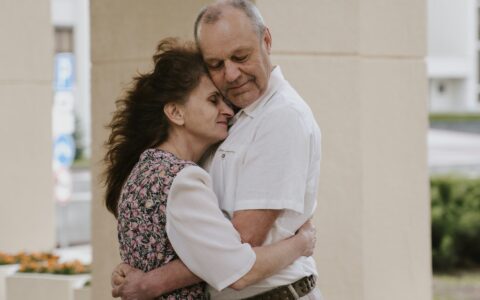
“Hug”, Courtesy of Polina Kuzovkova, Unsplash.com, Unsplash+ License

