

Practicing Relaxation Techniques for Anxiety
Texas Christian Counseling
Relaxation techniques for anxiety can significantly reduce anxious thoughts and feelings. Many of them activate the parasympathetic nervous system, calming anxiety and releasing brain chemicals responsible for happiness and feelings of accomplishment.
Relaxation Techniques for Anxiety
Relaxation techniques for anxiety are activities that you perform to ease tension, reduce stress hormones, and clear anxious thoughts. These activities can cause the brain to release a cascade of serotonin or dopamine (feel-good brain chemicals), lower blood pressure and heart rate, and, in some cases, stop panic attacks.
As you work your way through the relaxation techniques for anxiety suggested below, remember that each one requires practice. As you become more proficient and the strategy becomes second nature, you may notice a calmer demeanor. Also, some techniques are better suited for particular situations. For example, progressive muscle relaxation (PMR) is more useful if done lying down, such as in bed. But you wouldn’t try PMR while driving. Deep breathing or prayer might be better in that situation.
Progressive Muscle Relaxation (PMR)
Progressive muscle relaxation (PMR) is the practice of tensing and relaxing specific body parts in order. We carry stress in our muscles, and this gait may feel natural until you try this technique.
You will understand how much tension a specific part is holding by voluntarily tensing it and then releasing all tension. This is often felt in the shoulders, jaw, and upper back, although you can carry tension in any part of the body.
Start in a lying position on your back. Close your eyes and focus on your body. Try to relax completely. Starting with curling your toes, hold the tension for a few seconds, then release. Next, move to the feet, tensing and relaxing after several seconds.
Scan up the body by tensing and releasing each part until you reach the face. Afterward, note any remaining tense spots. Work on these body parts and repeat as needed. This is a great relaxation technique to do at bedtime.
Deep Breathing
Deep breathing can be done in various ways, but the point is to activate the parasympathetic nervous system and ease the tension and anxiety. You can practice deep breathing almost anywhere, making it a versatile technique to use at work.
If possible, sit and close your eyes (if you are driving or in a situation where it is not possible, keep your eyes open) and take a deep breath, inhaling through the nose and filling the lower cavities of the lungs. Hold for a few seconds, then slowly exhale through the mouth.
You can try this by inhaling for 4 counts, holding the breath for 4 counts, and releasing for 4 counts. The 4-7-8 method follows this same system. Inhale through the nose for the count of 4, feeling the diaphragm expand. Hold your breath for the count of 7. Then, release through the mouth for a slow count of 8.
 Stretching
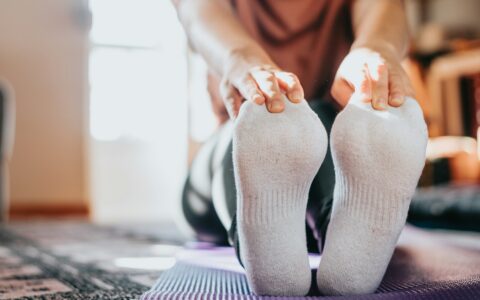
Stretching sounds easy, yet most of us don’t take the time to practice stretching consistently. Stretching can help soothe tense muscles, regulate breathing and heart rate, and leave you feeling calmer. Pilates and stretching videos can help to strengthen muscles, prevent injuries, and improve balance.
If you are new to stretching, consult a personal trainer to learn good form. You can find Pilates and stretching videos by fitness instructors or experts on YouTube. Start slowly and warm up the muscles, if necessary, with a few gentle movements. You can find short morning and evening stretching workouts to start and end your day with a little less tension.
5-4-3-2-1 Grounding Technique
The 5-4-3-2-1 grounding technique is effective in helping an anxious individual return to the present. It is a great tool to use during panic attacks when anxiety manifests into physical reactions. The individual is grounding themselves in the present, focusing on their surroundings.
To practice the 5-4-3-2-1 grounding technique, take a deep breath and notice your surroundings, whether this is outdoors or in a room. Name five items you see in front of you. Next, name four things you can touch. Feel their texture and temperature. Third, name three things you can hear. Focus on the sounds.
Next, name two things you can smell. You may need to get closer to an item. Lastly, name one thing you can taste. If you cannot taste anything, carry a mint with you specifically for this purpose, or brush your teeth.
Guided Imagery
Do you remember daydreaming in school? It may not have been such a bad thing. When we get overly anxious, our brains want an escape to give the body time to calm down. Guided imagery is similar to daydreaming. Imagine a scene that brings you peace. Maybe this is a cabin in the woods, a beach retreat, or your own backyard.
Imagine the sights, sounds, and smells of this place. Are there birds singing or ocean waves breaking? Do you smell cookies baking in the kitchen at the cabin? Use all five of your senses. Add to your imaginary scene until you feel calmer. If you are having trouble imagining a scene, research guided imagery apps or recordings to help.
Prayer and Meditation on God’s Word
Prayer and meditation on God’s word can ease anxiety. Reading the Bible and praying Scripture embed Jesus’ words into your mind and heart. For example, Jesus is recorded as saying in Matthew, Chapter 6, “Therefore I tell you, do not worry about your life, what you will eat or drink; or about your body, what you will wear. Is not life more than food, and the body more than clothes?…Can any one of you by worrying add a single hour to your life?” (Matthew 6:25, 27, NIV)Choose a Scripture or two to memorize and pray over your life. Meditate on these words when you feel anxious. Bind anxiety, chronic stress, and mental turmoil, and release peace and joy over your life in Jesus’ name.
Calming Music
Music has a way of transporting us to a different place and time. You can make your relaxation techniques for anxiety more effective by adding calming music. Try PMR, deep breathing, stretching, or guided imagery with background music.
Create a music playlist of your favorite songs that help you relax. These can be songs from a more relaxed time in your life. Classical music is also an excellent choice, as it doesn’t interfere with prayer or meditation since it doesn’t contain any lyrics.
Strolling Outdoors
Getting outdoors and taking a stroll can positively affect your mental state. Being in nature has been shown to reduce anxiety and promote a sense of calm. Walk a little faster, and your brain will release endorphins, serotonin, and dopamine, leaving you feeling even better.
Aim for 15 to 20 minutes a day to walk about in nature. If you can’t squeeze in a walk, stand outside in your yard barefoot for a few minutes, taking in the sights and sounds to help ground you in nature.
Tub Soaking
Soaking in a warm bath can ease muscle tension and reduce anxiety. In our busy lives, we often don’t slow down to relax. Taking a bath and soaking in the tub forces us to unwind. Our mind and body have no place to go. The activity also sends a powerful message to the brain that you are worth the time and effort.
Add a warm bath to your nighttime routine and apply moisturizer afterward. Studies have found that rubbing cream or lotion into the skin can reduce feelings of anxiety and depression.
Christian Counseling for Anxiety
Anxious thoughts can be intrusive and keep your body in a state of fight-or-flight. Chronic stress is detrimental to both your physical and mental health. Try a few of the relaxation techniques for anxiety that resonate with you, as discussed above.
Some evidence-based psychological therapies and strategies can help reduce your stress level and teach you the skills and coping mechanisms you need to regulate emotions. If you feel that you need a deeper dive, reach out to our office today to schedule an appointment with a Christian counselor. Connect with us today.
“Stretching”, Courtesy of A. C., Unsplash.com, Unsplash+ License; “Drawing the Bath”, Courtesy of Daiga Ellaby, Unsplash.com, Unsplash+ License