
Working Through Church Hurt: Finding Healing and Hope
Trisha Otey
Jesus said to His disciples, “In this world you will have trouble. But take heart! I have overcome the world.” (John 16:33, NIV) Being a disciple of Jesus comes with its fair share of struggles, but the encouragement is that Jesus has triumphed over the worst this world could do to us. One particularly difficult challenge is when the source of trouble comes not from the world out there, but from God’s own people. Church hurt is a reality that many have experienced.
Church Hurt: A Painful Reality
The community of God’s people is meant to be a different sort of community. It is composed of people who are dealing with their own struggles, but this is a community being changed and transformed into the likeness of the Son (2 Corinthians 3:18), and it is a community that is led by God’s own Spirit (Galatians 5:16-26; Romans 8:5-17). It is supposed to be a place of encouragement, refuge, and growth in Christ.
All of this is what the church, the community of God’s people, is supposed to be. However, it is also true that in many ways and across many centuries, the church has also been a source of deep pain. This is true for people in the church and those outside of it. For those who can be considered insiders because they also believe in Jesus as Lord, church hurt can cause emotional and spiritual damage and leave lasting scars that require healing and restoration.
What is church hurt? Church hurt can be understood as the relational, spiritual, physical, and emotional wounds that are caused in the context of a church community. This kind of hurt can be the result of betrayals of trust, feeling excluded, abuse of authority, hypocrisy, gossip, or judgmental attitudes through the words, actions, or postures of fellow congregants, leaders, or the culture within that community and other communities around it.
 Church hurt thus occurs when the community that is meant to be a signpost and reflection of Christ’s love becomes a place of deep wounding. Church hurt can happen in subtle ways that chip away at the foundations of relationships and in abrupt and traumatic ways as well. Something like feeling dismissed, overlooked, or unvalued can lead to church hurt, just as experiencing bullying, manipulation, or spiritual abuse can.
The pain caused by these actions is all too real. Often, the result is that the person who was hurt may become disillusioned with their faith altogether. They can begin to mistrust leadership or lose their sense of connection to the body of Christ.
The Various Paths of Church Hurt
Church hurt can come about in several ways. When Jesus was asked why He ate and spent time with unsavory characters, He responded, saying, “It is not the healthy who need a doctor, but the sick. I have not come to call the righteous, but sinners.” (Mark 2:17, NIV) One of the main reasons why church hurt occurs is because churches are essentially hospitals full of desperately sick people in need of a savior. Church is a community of imperfect people.
The church is a community of people who have been rescued from themselves through Christ and given new lives empowered by the Holy Spirit (Colossians 3:1-17; Ephesians 2:1-10; Romans 8).
Believers are saved by the unmerited favor of God and called to a new way of life. However, Christians are still human, struggling with old patterns of sin and harmful behaviors. These are to be put to death, and that highlights the ongoing challenge that they are for believers.
Misuse of authority is a major cause of church hurt. That includes leaders behaving in domineering, abusive, and controlling ways that betray trust and misrepresent Jesus. Abuse can be physical, sexual, financial, emotional, and spiritual in nature. Whatever form it takes, it’s a leader misusing their position and damaging others along the way.
Relationships can be deeply damaged in the church because of harsh judgment and gossip. Divisive words spoken outright or behind people’s backs can erode the cohesion of a church community, and being judgmental can demean others and leave them feeling isolated.
There is a vast difference between speaking truth to one another in love (Ephesians 4:11-16) and holding each other accountable and standing in haughty judgment of one another (Galatians 6:1-10).
Apart from gossip and judgment, another source of church hurt is unmet expectations. It is right to expect great things from the community of God’s people. However, hurt can arise when one expects the community to meet every spiritual, physical, and emotional need perfectly.
In the church, there will be a lot of give and take, a lot of learning and growing together. That is one reason Scripture calls us to bear with and forgive each other (Colossians 3:12-14; Ephesians 4:32).
Another common source of church hurt is when there are conflicts originating in cultural differences or doctrinal issues. As a collective of people from every nation, people, and tribe, and as the church is made up of people from every walk of life, there will be differences. These can be in worship styles, theological emphases, or church practices. When these differences are handled poorly or insensitively, things can escalate, and people can wound each other deeply.
Church hurt can be the result of intentional as well as unintentional actions, behaviors, attitudes, and postures that individuals or communities take. These can be the source of lasting pain, especially when they go unrecognized and aren’t dealt with wisely, in humility and love. The issue of distributing aid among widows threatened the early church, and thankfully, the disciples dealt wisely and swiftly with the concerns (Acts 6:1-7).
The reality of church hurt is an ever-present one. The community of God’s people needs to continuously rely on the Lord’s grace and wisdom as they pursue genuine accountability and seek restoration of what is broken.
How Church Hurt Impacts Individuals and the Community
The community of God’s people is often described as a body (Ephesians 4:1-16; 1 Corinthians 12; Colossians 3:15). That’s one reason why Paul writes that there shouldn’t be division in the body, and instead “its parts should have equal concern for each other. If one part suffers, every part suffers with it; if one part is honored, every part rejoices with it.” (1 Corinthians 12:25-26, NIV) Christians often forget that they are part of Christ’s body along with others.
For individual believers, church hurt can have the effect of a loss of trust in spiritual leadership. There are probably too many stories that have been told describing the aftermath of a betrayal by a pastor or other church leader. There may be feelings of confusion, bitterness, and anger that result from church hurt. This can lead to emotional withdrawal or isolation if one doesn’t have space to process things with the community.
Another devastating result of church hurt is that it can result in questioning God’s goodness and even one’s own faith. If a church leader gaslights a congregant, for instance, the congregant may believe they are to blame and that their faith is defective in some way. It can take years to overcome this kind of damage. Some people have left the church altogether because of the deep spiritual wounds they’ve experienced.
The community is also affected by church hurt in various ways. A church may struggle to thrive in the wake of church hurt, especially if matters aren’t dealt with honestly. A culture of suspicion, fear, or division can take root and shape how people interact with one another.
If the community hardens its heart toward a particular individual, or if an individual or group of individuals is the source of hurt for the broader community, that can affect the dynamics of the community. Church hurt can weaken unity and damage the effective witness of Christ’s body. A community may struggle to regain its sense of self. When wounded members withdraw or leave the community, the sense of fellowship may suffer.
Finding Healing and Hope After Church Hurt
While it’s not quick or easy, restoration, healing, and hope are possible with the Lord’s help and presence. If you’ve experienced church hurt, the movement toward healing will involve intentional steps that include:
Acknowledge the pain The hurt exists, and you can name it along with the grief it’s caused before the Lord through lament.
Seek the Lord’s heart Spend time in Scripture and prayer to hear the Lord’s heart for His church. Ultimately, He is the head of the church (Ephesians 4:11-16), and He is building it (Matthew 16:18).
Humbly assess your own heart Hurt may be the result of others’ actions, but it is nonetheless wise to humbly examine if there are areas where you may need to take responsibility. This isn’t to excuse wrongdoing or victim-blame, but to ensure your own heart remains open, forgiving, and teachable. Jesus calls believers to remove the log from their own eye before addressing the speck in another’s (Matthew 7:3-5).
Forgive Forgiveness gives you freedom. It doesn’t mean forgetting or going back into unsafe situations, but it allows you to release resentment and entrust justice in the Lord’s hands (Romans 12:17-21).
Pursue healing and connection Finding healing may involve hard conversations with those you hurt or those who hurt you, where this is appropriate and safe. Consider re-engaging with a church community, even if it’s a different one, because we are meant to be in community with others.
Seek support Making sense of church hurt is best done in a context with trusted mature believers or with a trained and licensed Christian counselor. Your counselor can listen, pray with you, and guide you, helping to break the power of isolation and offering perspective.
With help, you can discover renewed hope and a deeper, more resilient faith. Contact our reception team or browse our online counselor directory to process the pain from church hurt.
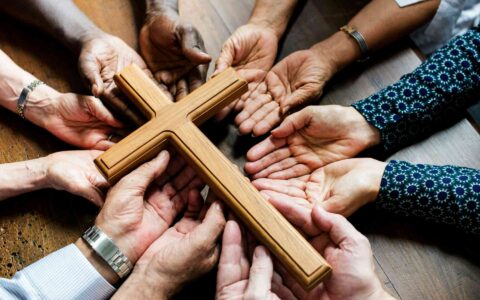
“Hands and Flower”, Courtesy of Lina Trochez, Unsplash.com, CC0 License; “Crocheted Heart”, Courtesy of Ante Gudelj, Unsplash.com, CC0 License; “Open Bible”, Courtesy of Aaron Burden, Unsplash.com, CC0 License; “Around the Cross”, Courtesy of Curated Lifestyle, Unsplash.com, Unsplash+ License